


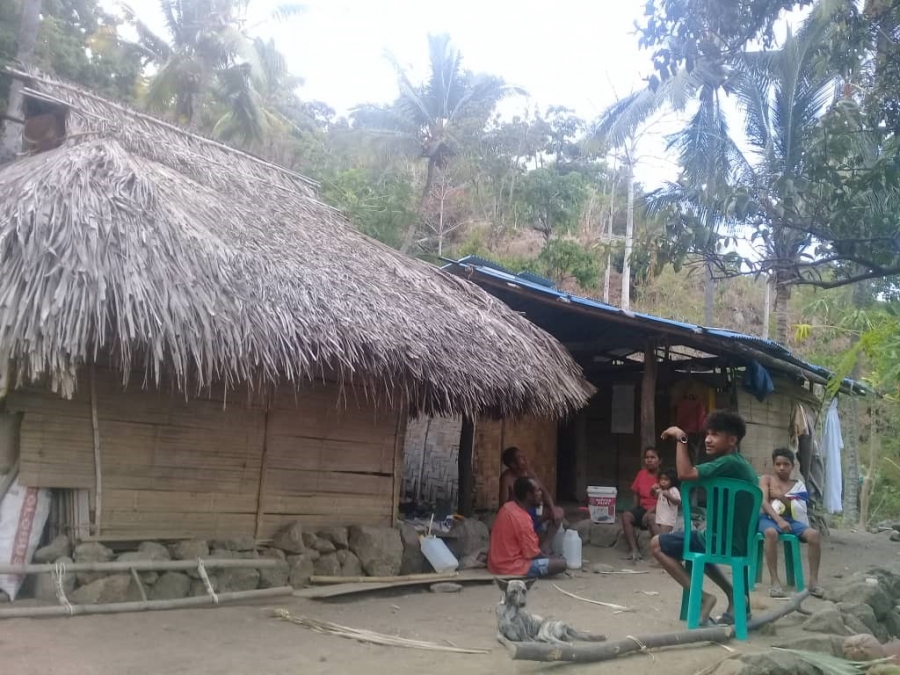
Response to the water emergency in Makili
Budget
57.800 €
Duration
2023-2024

Sdg
Access to water

Sector
Water
Context:
The proposed intervention intends to address the lack of drinking water in the village of Makili, inhabited by 300 families (2,672 inhabitants) and divided into five administrative sectors.
In 2020, both the main water source, which provided drinking water to most of the village, and a smaller source, located 100 meters upstream from the main one and which guaranteed drinking water to sector 2 only, dried up.
In 2021, the largest source became active again for around 20% of its water flow, but it is not constantly active, as was the case before 2020: in fact, it may happen that it will not supply water to the population for entire weeks. This deprivation leads, especially the poorest families, to suffer great inconveniences in their daily life with serious consequences in terms of hygiene and health standards. Furthermore, in the absence of water, families spend time obtaining this resource in distant locations, with less time dedicated to work and high costs.
The smaller source, on the contrary, is still dried up and "sector 2", which was totally dependent on it, is therefore without access to drinking water. The population of this sector (200 people gathered in 30 families) has to make long journeys to get water and some families have made the decision to move to other places, in order to have access to drinking water, with consequent problems of vulnerability and important economic difficulties.
The drying up of the sources can be attributed mainly to climate change, which is altering the rainfall rate on the island, not much in the reduction of rainfall compared to the long-term average (which for the island is around 850 mm per year), but rather in the prolongation of drought and the subsequent arrival of catastrophic rains. It has been observed how rainfall is lower than average for two long consecutive years, 2019 and 2020, and this can explain the drying up of sources in 2020. In 2021 rainfall increases significantly, compared to the annual average, but it is concentrated mostly in the month of April, in which 333.8 mm of rain fell (over 3 times compared to the same month of the previous year and almost 6 times compared to 2019). In fact, in April 2021, a devastating tropical storm hit Atauro, called the "first storm (double cyclone) in the history of this island" by the local partners of the project.
Actions
A solution to the lack of water from the springs was identified in the construction of cisterns to collect rainwater from roofs, currently non-existent in Makili.
Activity 1. Identification of the 50 target families
Activity 2: Construction of the tanks
Activity 3: Training courses for beneficiary families (how to carry out small maintenance jobs on the new cisterns and how to maintain their hygiene and cleanliness, to guarantee the drinkability of the water collected)
Activity 4: Coordination and monitoring of the project
Expected results
The following results are expected:
- Provision of 50 tanks to Makili families
- Bring together a team of bricklayers, with a chief technician, for the structural work on the tanks
- Training the families in the correct management of cisterns and the purification of rainwater.
News
Donors

Regione Autonoma Trentino Alto Adige

Comune di Besenello
